

When evaluating digital infrastructure, corporate decision-makers are frequently presented with a comforting narrative: low power metrics, green certificates, and ambitious net-zero pledges. Yet, for ESG officers, facilities directors, and procurement leaders, a fundamental question must be asked: If your data centre provider claims to be sustainable, why are they reluctant to show you their real-time […]

When evaluating digital infrastructure, corporate decision-makers are frequently presented with a comforting narrative: low power metrics, green certificates, and ambitious net-zero pledges.
Yet, for ESG officers, facilities directors, and procurement leaders, a fundamental question must be asked: If your data centre provider claims to be sustainable, why are they reluctant to show you their real-time operational data under local climate conditions?
For too long, the industry has relied on metric cherry-picking. However, as regulatory oversight tightens in Malaysia, relying on unverified claims is no longer just an environmental misstep—it is a supply-chain risk.
Power Usage Effectiveness (PUE) and Water Usage Effectiveness (WUE) remain the cornerstone metrics of data centre efficiency. Yet, when viewed in isolation, both are prone to misinterpretation.
PUE calculates total facility energy divided by energy delivered strictly to IT equipment:

While 1.0 represents perfect theoretical efficiency, context is everything. Many operators market a “design PUE”—a theoretical baseline calculated under ideal, cool weather conditions—rather than an annualised operational figure. In Malaysia’s tropical climate, an unverified design figure tells you very little about real-world performance.
WUE measures the volume of water consumed per kilowatt-hour of IT energy:

Herein lies the classic trade-off: a provider can dramatically lower their PUE by deploying evaporative water cooling. On paper, their energy numbers look exceptional. In practice, they consume millions of litres of municipal water daily. Trading energy inefficiency for local water scarcity is not sustainability; it is an engineering compromise disguised as progress.
The era of voluntary, self-reported sustainability is coming to an end. The Ministry of Investment, Trade and Industry (MITI) and the Malaysian Investment Development Authority (MIDA) have established strict Guidelines for Sustainable Development of Data Centres.
MIDA’s framework moves sustainability from a marketing option to a statutory requirement:
For enterprise buyers, hosting in a non-compliant facility exposes your organisation to regulatory friction, corrupted Scope 2 carbon disclosures, and potential utility pass-through costs.
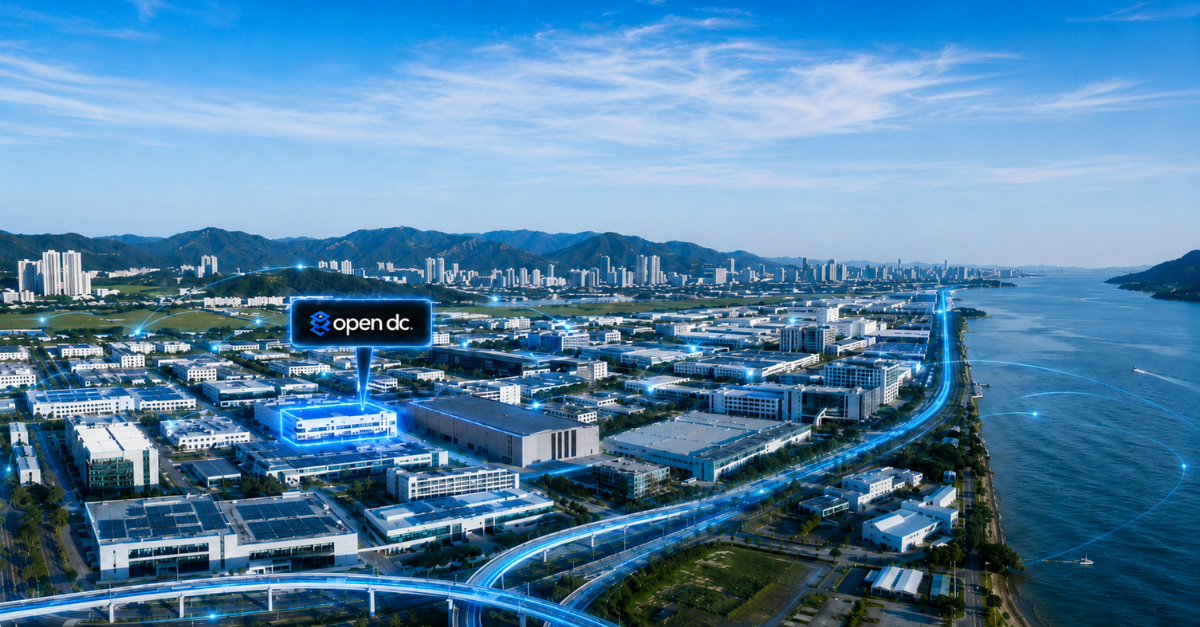
Achieving true operational efficiency in a tropical climate requires deliberate structural engineering. This philosophy guided the development of Open DC’s PE2 facility in Penang.
Rather than relying on seasonal shortcuts or excessive water draw, PE2 was engineered specifically to meet MIDA’s sustainable development criteria:
Selecting a data centre host is no longer a simple real-estate transaction; it is a long-term compliance strategy.
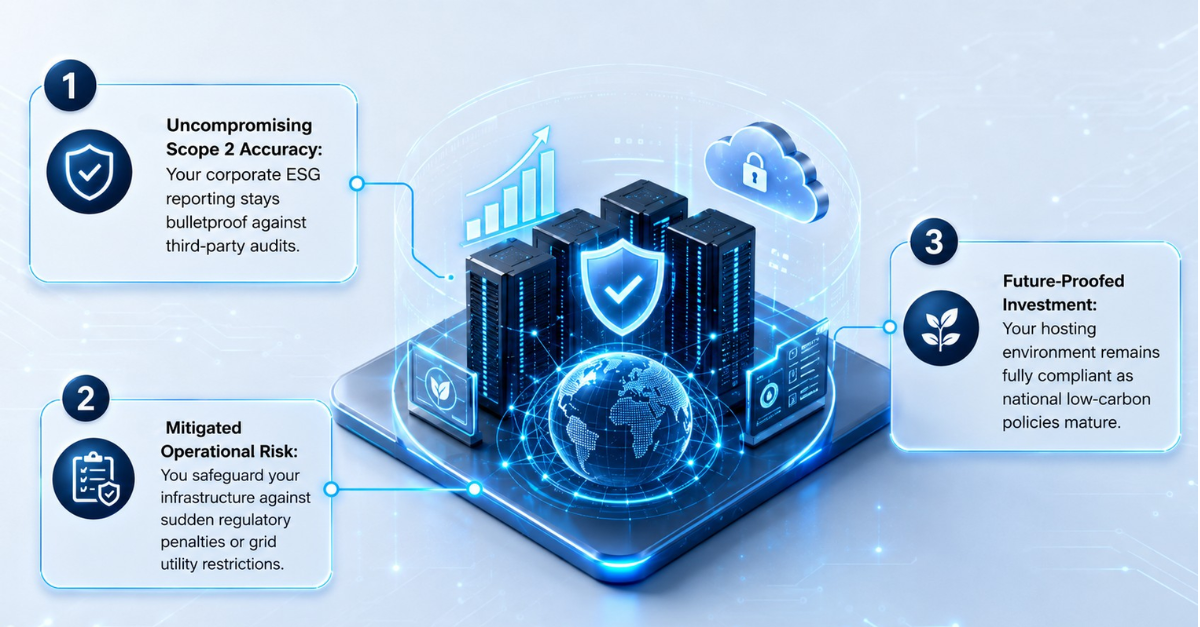
Navigating Malaysia’s evolving digital infrastructure landscape requires a partner who does not simply follow regulations after the fact, but designs infrastructure around them from day one. Working with an operator who thoroughly understands local statutory frameworks—from MIDA efficiency targets to utility reserve parameters—ensures three
vital outcomes:
Is your current hosting strategy built on brochure promises, or verified regulatory engineering?
Before committing your critical workloads, speak directly with the team that understands Malaysia’s data centre landscape inside out.
Discover how PE2 can secure your compliance and power your growth.
Empowering Southeast Asia’s Digital Future.
For further enquiries
☎️: 03 8888 8188 (General Line)
📱: 012 3188 0446 (Sales)
Operating Hours: Monday – Friday, 9am – 6pm



Copyright © Open DC Sdn Bhd (1138988-T) | All Rights Reserved.