

The next wave of digital growth is no longer defined by cloud adoption alone. It is being shaped by artificial intelligence, machine learning, real-time analytics and cloud platforms that demand faster processing, denser infrastructure and stronger network resilience. Across Southeast Asia, the data centre market is moving into a new phase. Singapore remains a mature digital hub, while Malaysia is gaining […]

The next wave of digital growth is no longer defined by cloud adoption alone. It is being shaped by artificial intelligence, machine learning, real-time analytics and cloud platforms that demand faster processing, denser infrastructure and stronger network resilience.
Across Southeast Asia, the data centre market is moving into a new phase. Singapore remains a mature digital hub, while Malaysia is gaining momentum as an AI-ready infrastructure base supported by regional connectivity, industrial demand and growing hyperscale interest.
The objective now shifts to building smarter, cooler and more interconnected digital ecosystems data centre.
Liquid cooling has now become more than a technical upgrade. It becomes part of the foundation for high-density computing, resilient peering and sustainable digital expansion.
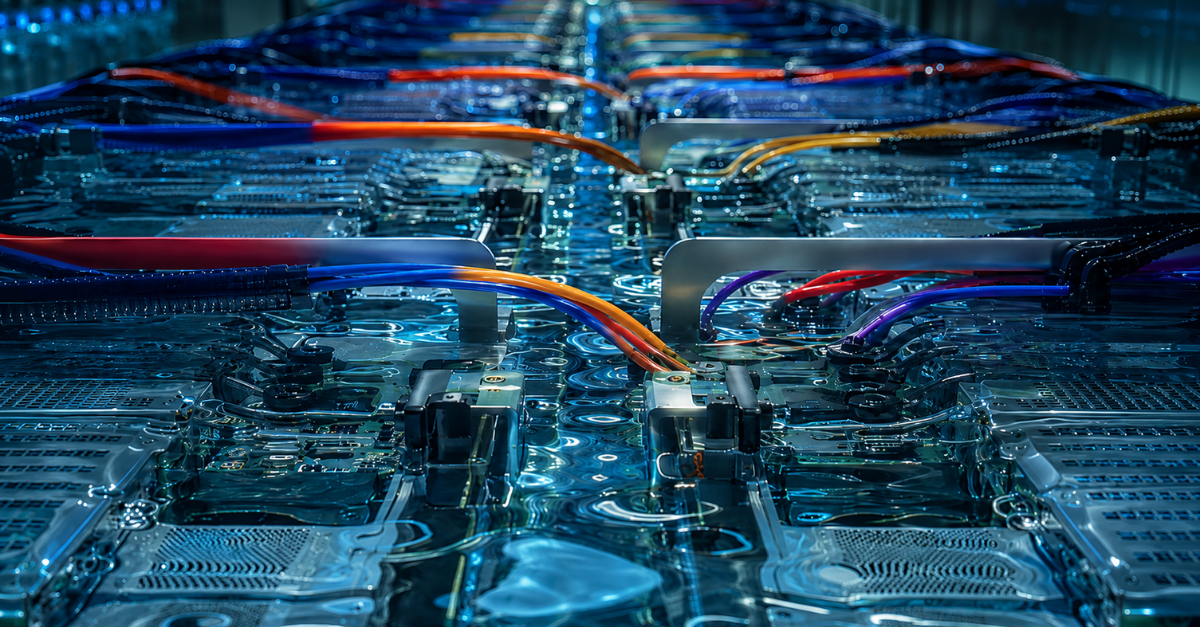
Liquid cooling uses water or specialised dielectric fluids to remove heat from IT equipment more efficiently than traditional air-based systems.
Rather than relying only on large volumes of chilled air across a data hall, liquid cooling brings heat removal closer to the source.
This is especially important for AI and GPU-intensive workloads, where heat is concentrated around the most compute-heavy components.
The result is a more efficient cooling approach that supports high-performance infrastructure, reduces mechanical strain, improves space efficiency and contributes to long-term sustainability targets.
Chilled water systems distribute cooled water through centralised systems to support targeted cooling across the data hall.
Direct-to-chip cooling delivers coolant directly to cold plates attached to high-heat components such as CPUs and GPUs.
Immersion cooling submerges IT equipment in non-conductive fluid to remove heat at a much closer level.
For Open DC, PE2 in Bayan Lepas Technology Park is designed around advanced air, chilled water and direct-to-chip cooling. This supports AI, cloud computing and high-density workloads within Penang’s semiconductor and technology corridor.

AI infrastructure does not only generate heat.
It also generates traffic.
Every AI model, cloud application, content platform and enterprise system depends on secure, rapid and resilient data movement. A data centre may be built for high-density workloads, but without strong interconnection, performance can still be limited by routing complexity and network bottlenecks.
This is where Malaysia’s digital corridors become strategically important.
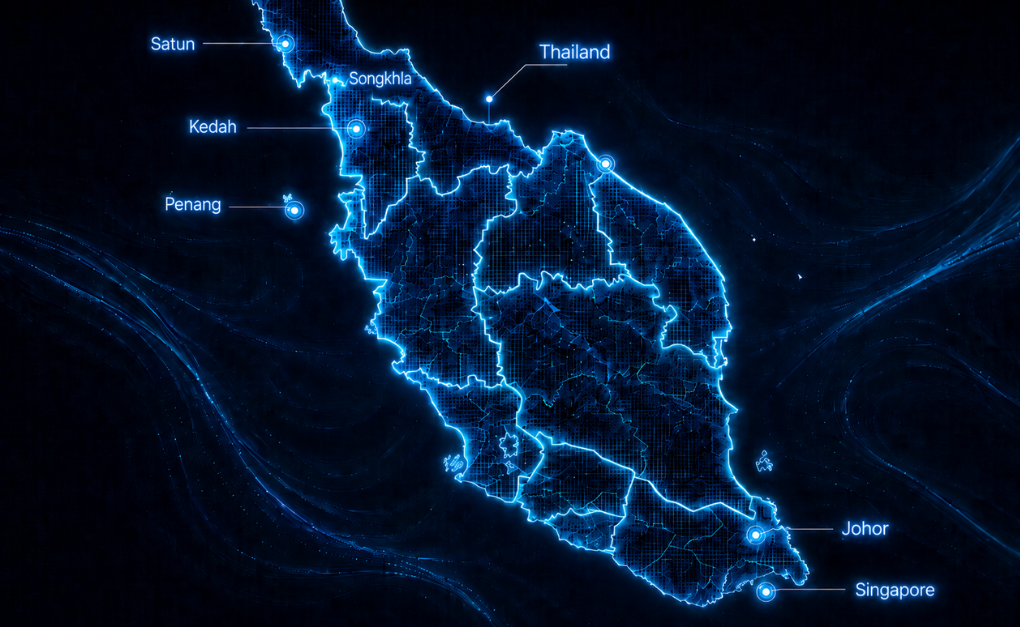
The Malaysia-Singapore corridor connects one of Southeast Asia’s most mature digital markets with Malaysia’s fast-growing infrastructure base. The Malaysia-Thailand corridor strengthens northern cross-border connectivity into Thailand and the wider Indochina region.
Open DC bridges these corridors through an integrated ecosystem that unites network, data centre and Internet Exchange infrastructure under one platform. Data centres by Open DC are carrier-neutral facilities, Rated 3 standards, high-density infrastructure, direct IX access, dark fibre routes and cross-border connectivity to Singapore and Thailand.
Together, these locations form a connected platform for AI, cloud, content, telco and enterprise growth.
High-density AI facilities thirst for carrier-neutral interconnection.
Through DE-CIX Malaysia and JBIX, Open DC supports access to one of the region’s advanced carrier-neutral Internet Exchange ecosystems. This enables low-latency, high-capacity interconnection across Malaysia and Singapore, while supporting routing resilience, robust security and direct access to major cloud and content platforms.
This matters because AI and cloud workloads cannot depend on a single network path.
Resilient peering enables more direct traffic exchange between networks, cloud platforms, content providers and enterprises. It reduces unnecessary routing complexity, strengthens network diversity and supports more predictable digital experiences.
For organisations operating across ASEAN borders, the data centre is no longer just a hosting location.
It becomes an interconnection hub.
Located in Bayan Lepas Technology Park, PE2 is Penang’s first full-scale next-generation data centre.
It is designed with TIA-942 Rated 3 standards and built to support AI, cloud computing and high-density workloads. Its cooling architecture combines advanced air, chilled water and direct-to-chip technologies, with a targeted PUE below 1.5.
The strategic value of PE2 is not only found in its cooling design.
It is found in the combination of location, AI-readiness, carrier-neutral access and interconnection.
In Penang, infrastructure centres at the heart of Malaysia’s semiconductor and advanced manufacturing ecosystem. In Kedah, D8-1 extends Open DC’s reach into the Malaysia-Thailand telecommunications corridor, with DE-CIX Internet Exchange presence, premium-enabled peering and proximity to key cable landing stations.
In Johor, JB1 and JB2 strengthen the Malaysia-Singapore digital corridor through DE-CIX Malaysia’s JBIX presence.
This creates a stronger infrastructure story than capacity alone.
It creates a platform where cooling, connectivity and peering work together.
Liquid cooling has moved from a future concept to a practical requirement for AI-ready infrastructure.
However, the real competitive advantage comes when advanced cooling is paired with seamless interconnection.
Open DC brings these layers together through carrier-neutral facilities, DE-CIX Malaysia-enabled peering, cross-border connectivity and AI-ready infrastructure across Peninsular Malaysia.
In the next phase of the digital economy, success will be defined by how efficiently infrastructure cools, how securely it connects and how resiliently it peers.
Empowering Southeast Asia’s Digital Future
For further enquiries:



Copyright © Open DC Sdn Bhd (1138988-T) | All Rights Reserved.