

Data centre cooling in Malaysia used to be an engineering choice. It is becoming a licence to operate. Hot weather pushes up cooling load and power draw. Rack densities are rising from single-digit kilowatts to tens of kilowatts, and AI racks to 70 kW and beyond. And water has become an approval condition. In 2027, […]
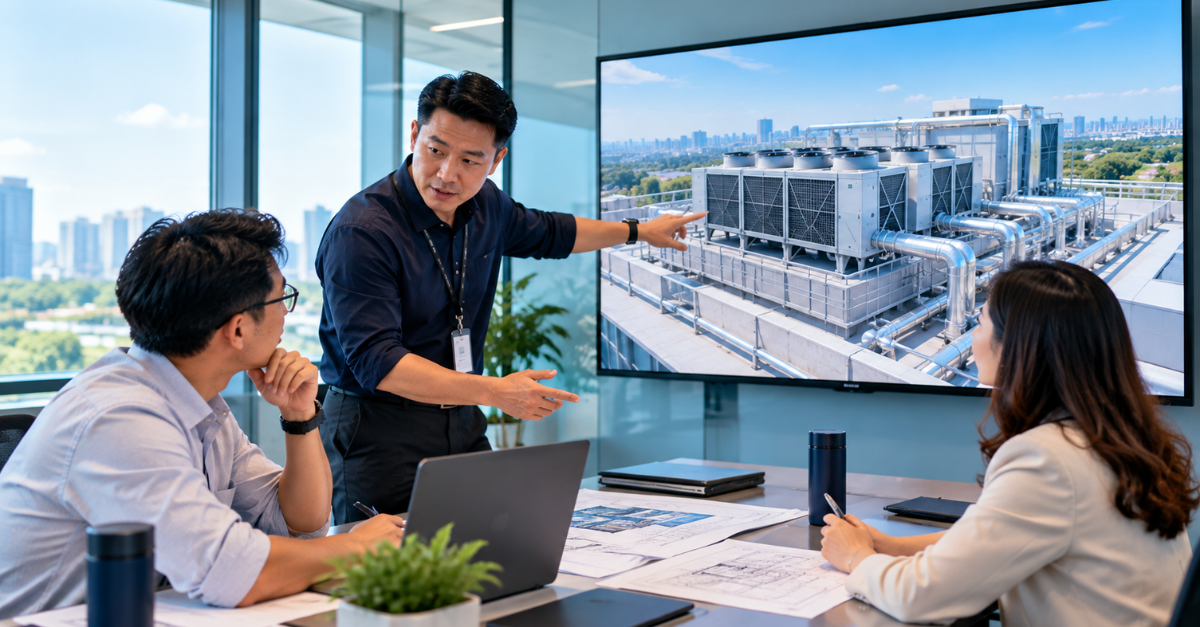
Data centre cooling in Malaysia used to be an engineering choice. It is becoming a licence to operate. Hot weather pushes up cooling load and power draw. Rack densities are rising from single-digit kilowatts to tens of kilowatts, and AI racks to 70 kW and beyond. And water has become an approval condition.
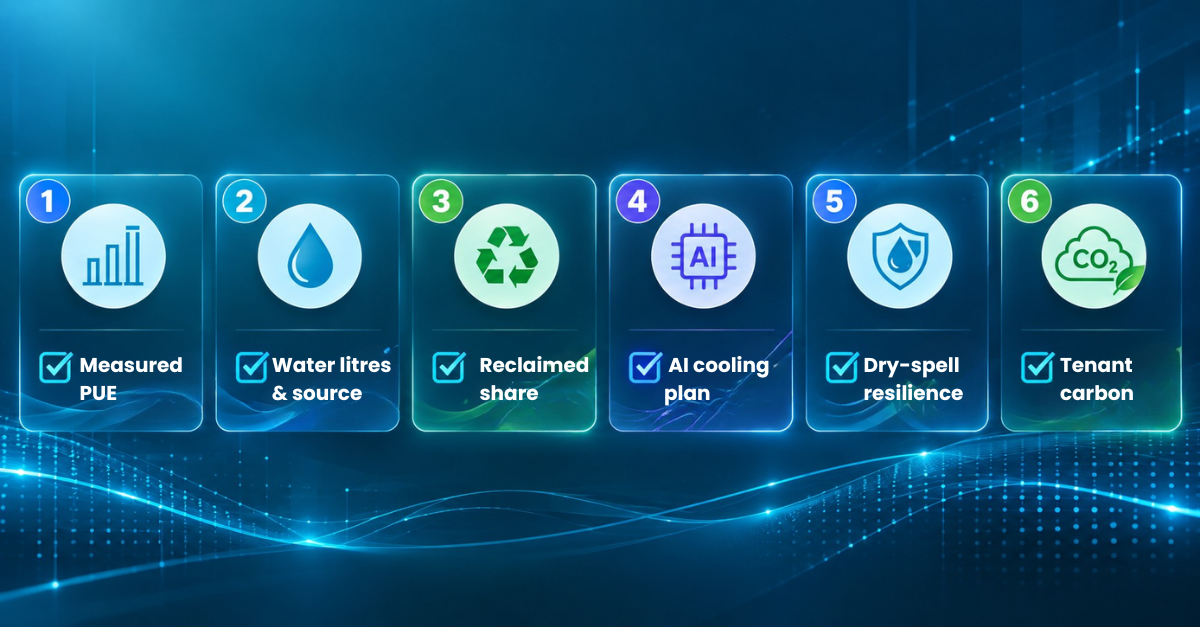
In 2027, the question will not be whether an operator has a sustainability policy. It will be what the operator can prove. Here are the six things we think every Malaysian data centre will need to show, and where we stand on each.
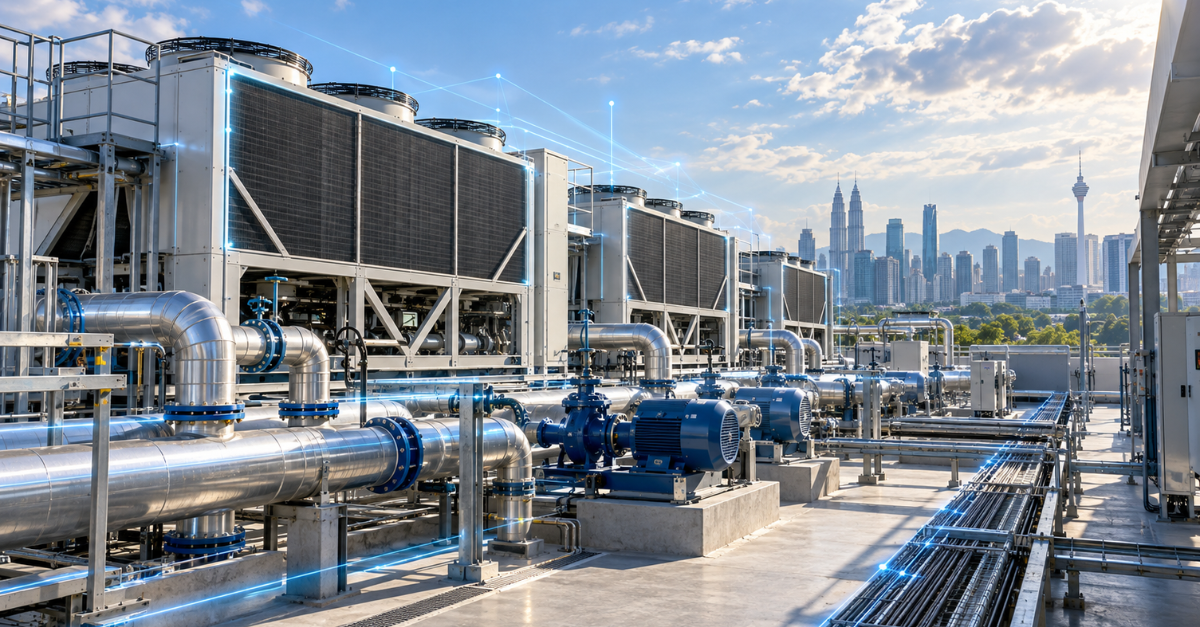
Three pressures arrived at once.
Heat and power
Cooling is the largest non-IT load in a tropical data centre. When temperatures rise, so does power draw, and the weather now reaches the grid directly. Budget 2027 itself noted that hot weather has pushed up household electricity use.
Density
AI servers concentrate heat. Industry experts put AI racks at 70 to 107 kW and expect direct-to-chip liquid cooling to become standard within five to seven years. Air alone struggles well before that.
Water
Evaporative cooling uses less electricity but more water. Data centre applications in Malaysia have requested 808 million litres a day; only 142 million litres, about 18%, have been approved. Johor stopped approving its two highest water-use data centre tiers in November 2025 and is steering new facilities towards reclaimed water. Around 30% of Johor applications have reportedly been rejected for failing environmental standards.
Budget 2027, tabled on 9 October, set the backdrop for 2027 in three lines:
For data centres specifically, Malaysia’s Guidelines for Sustainable Development of Data Centre remain the reference. They put numbered thresholds on efficiency: a power usage effectiveness (PUE) of 1.6 for purpose-built colocation built after 2020, 1.7 for older and converted buildings, and a water usage effectiveness (WUE) design target of 2.2 cubic metres per megawatt-hour. Applications under the linked incentive scheme run to 31 December 2027, and the Data Centre Task Force already assesses energy, water and carbon. Our Budget 2027 readout covers the rest of the Budget’s data centre lines.
What it means for buyers: a longer runway for efficiency investment in cooling, solar and storage, and a stronger grid and water network underneath. The rules on what a facility must prove are unchanged, and the incentive deadline is now 14 months away.
1. Measured PUE, not design PUE
A design PUE is an intention. A measured annualised PUE, at a stated load factor, is a record. Expect buyers and approvers to ask for the second, and to ask which guideline category the building falls into, because the same figure passes in one category and fails in another.
2. Water use and water source
How many litres a day, at average and peak. Where the water comes from: municipal, reclaimed or groundwater. Expect WUE to be asked for alongside PUE.
3. A reclaimed-water share
Since June 2026, about 12 million litres a day of treated effluent from 13 plants has been supplied to Johor data centres. Reclaimed supply is the fastest lever an operator has on water. Expect the share to be asked for, and in Johor, required.
4. A cooling plan for AI densities
Can the hall take 40, 70 or 100 kW racks without wrecking its PUE? That means liquid-cooling readiness: coolant distribution units, piping and plant sized for it, not just a promise to “support DLC”.
5. Resilience in a dry spell or a heatwave
What happens to cooling when water supply is interrupted, or ambient temperatures stay high for weeks? Storage, alternative supply and chiller headroom will become due-diligence questions.
6. Carbon that the tenant can report
The guidelines define carbon usage effectiveness as the grid emission factor multiplied by PUE. A tenant’s reported emissions rise with its operator’s PUE. Expect sustainability teams to ask for the calculation.
There is no single answer; it is a trade between water and electricity, and between today’s density and tomorrow’s.
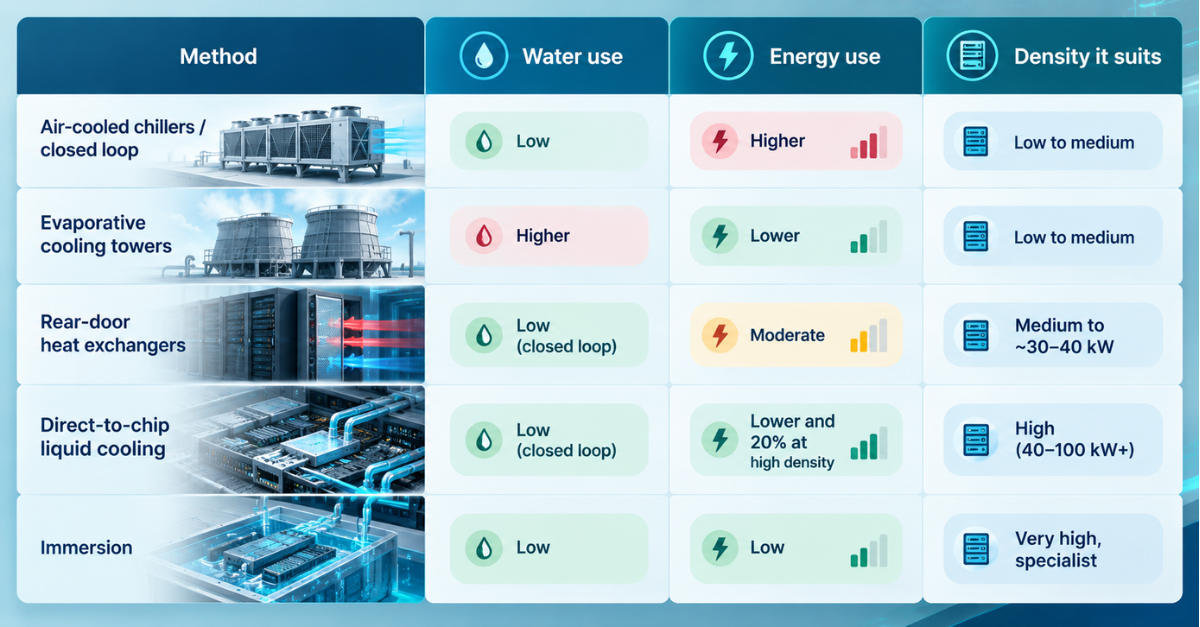
In a hot, humid climate underwater scrutiny, closed-loop and liquid approaches are gaining ground because they decouple density from both water and PUE.
What we can show today: our chilled-water sites run to a design and target PUE below 1.5. PE2 in Penang and D8-1 in Kedah are built for direct liquid cooling, and PE2’s new modular halls are designed for up to 150 kW per rack. PE2 also has on-site solar potential and renewable energy agreements.
In 2027, Malaysian data centres will be asked to prove six things: measured PUE, water use and source, reclaimed share, an AI cooling plan, dry-spell resilience and tenant carbon. Budget 2027’s green incentives, the MITI guidelines and the incentive deadline point the same way. Ask every operator for all six.
Contact us for a site sustainability data sheet: cooling method, design PUE, measurement basis and water position, site by site.
Empowering Southeast Asia’s Digital Future.
For further enquiries
☎️: 03 8888 8188 (General Line)
📱: 012 3188 0446 (Sales)
Operating Hours: Monday – Friday, 9am – 6pm



Copyright © Open DC Sdn Bhd (1138988-T) | All Rights Reserved.