

Two kilometres across the Causeway feels like geographical insurance. It is not. In modern enterprise infrastructure, physical proximity often acts as a soothing delusion—masking structural fragility at the transport layer beneath the comforting umbrella of a multi-site colocation contract. If a primary facility suffers a grid disruption, an excavator severs a subterranean conduit along the […]

Two kilometres across the Causeway feels like geographical insurance. It is not. In modern enterprise infrastructure, physical proximity often acts as a soothing delusion—masking structural fragility at the transport layer beneath the comforting umbrella of a multi-site colocation contract.
If a primary facility suffers a grid disruption, an excavator severs a subterranean conduit along the highway, or an upstream transit provider experiences a core routing collapse, where does your packet actually travel next?
As the Johor-Singapore Special Economic Zone (JS-SEZ) drives cross-border enterprise integration, network directors face a sobering reality: procuring footprint across two nearby facilities does not inherently establish high availability. If both sites rely on the same physical trenches, shared bridge landings, or hairpinned routing paths, you have not built redundancy. You have simply bought duplicate liability.
Corporate risk frameworks routinely confuse physical distance with topological independence. When dual-hub architectures prioritise geographical convenience over physical-layer auditing, enterprise networks inherit three systemic vulnerabilities:
Consider a common architectural flaw: a user in Johor Bahru querying a database hosted in Johor Bahru where the packet is routed across an international border into Singapore, through a third-party exchange, and back over the Causeway. This wasteful loop introduces unnecessary latency, inflates transit expenditure, and needlessly exposes domestic operations to international cable disruptions or regulatory handoffs.
Procurement teams frequently contract with two distinct telecommunication carriers to satisfy vendor diversity compliance. Yet, beneath the asphalt of cross-border bridges, competing carriers often lease capacity within the exact same concrete ducting. A single physical breach systematically compromises the entire carrier portfolio simultaneously.
Failover diagrams look seamless in architectural design decks, but frequently remain unverified under real-world stress. When secondary connectivity paths terminate at identical upstream transit providers or rely on unexamined third-party routes, failover capabilities remain theoretical hopes rather than operational safeguards.
Achieving true operational continuity across the Malaysia-Singapore interconnection requires shifting from passive colocation toward active, path-sovereign corridor engineering.
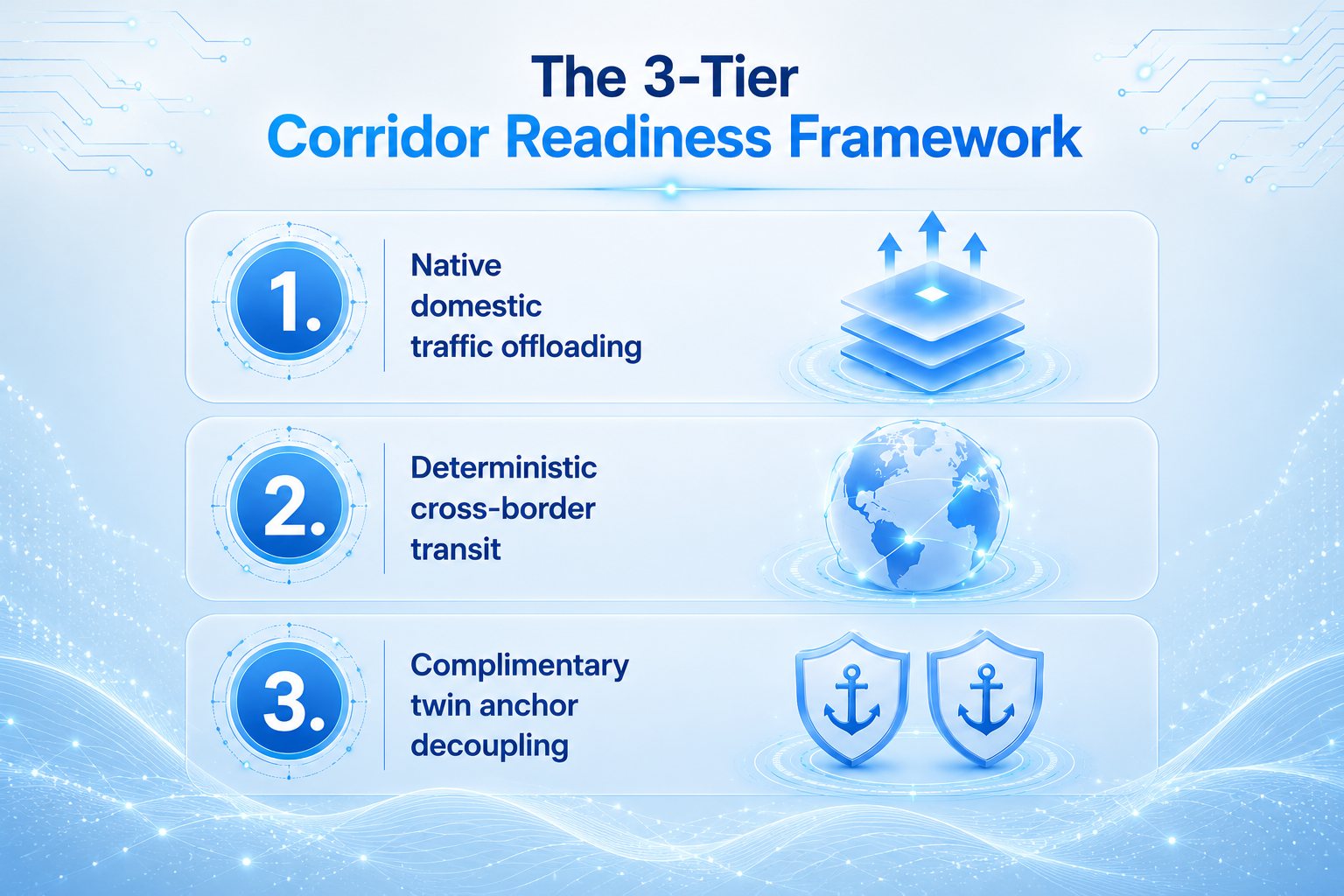
To transform Malaysia-Singapore data centre connectivity from a potential single point of failure into a resilient architectural asset, cross-border network design must be evaluated against three core engineering parameters.
Exchanging intra-country traffic across sovereign borders is a fundamental design inefficiency.
Utilising DE-CIX JBIX—the carrier-neutral Internet Exchange platform operating natively in Johor Bahru—ensures domestic packet exchange stays strictly within Malaysia. This drastically reduces latency, insulates local operations from cross-border conduit events, and preserves cross-border links for genuine international workloads.
Entrusting international handoffs to unverified, black-box transit routes leaves system availability to chance. Advanced cross-border data centre connectivity demands carrier-neutral flexibility, direct dark fibre options, and engineered transit links like Causeway Connect. Network engineers must maintain complete visibility into the physical landing points, river crossings, and subterranean ducts carrying enterprise data.
True high availability requires dual facilities engineered for complete operational decoupling under severe network stress, rather than arbitrary facilities located miles inland.
Located approximately 2 km from the Causeway, JB1 Data Centre serves as a primary edge hub integrated directly with DE-CIX Johor Bahru. Operating 2 km away, JB2 Data Centre hosts the second DE-CIX-JBIX point of presence in Johor Bahru. Operating in tandem, JB1 and JB2 function not as isolated addresses, but as interconnected twin anchors featuring distinct power grid feeds, diverse physical fibre entries, and dual-node peering redundancy.
High availability cannot be purchased off the shelf; it must be engineered from the physical layer up. Within a mature Open DC Connectivity Ecosystem, the focus shifts from mere rack space to path sovereignty: verifying that dark fibre routes are physically separated, ensuring cross-connect agility, and validating that secondary routes actively handle traffic before a primary outage occurs.
When a primary route, carrier, or facility experiences disruption, a properly audited secondary architecture carries the operational load seamlessly—without relying on shared physical conduits or hairpinning across international borders.
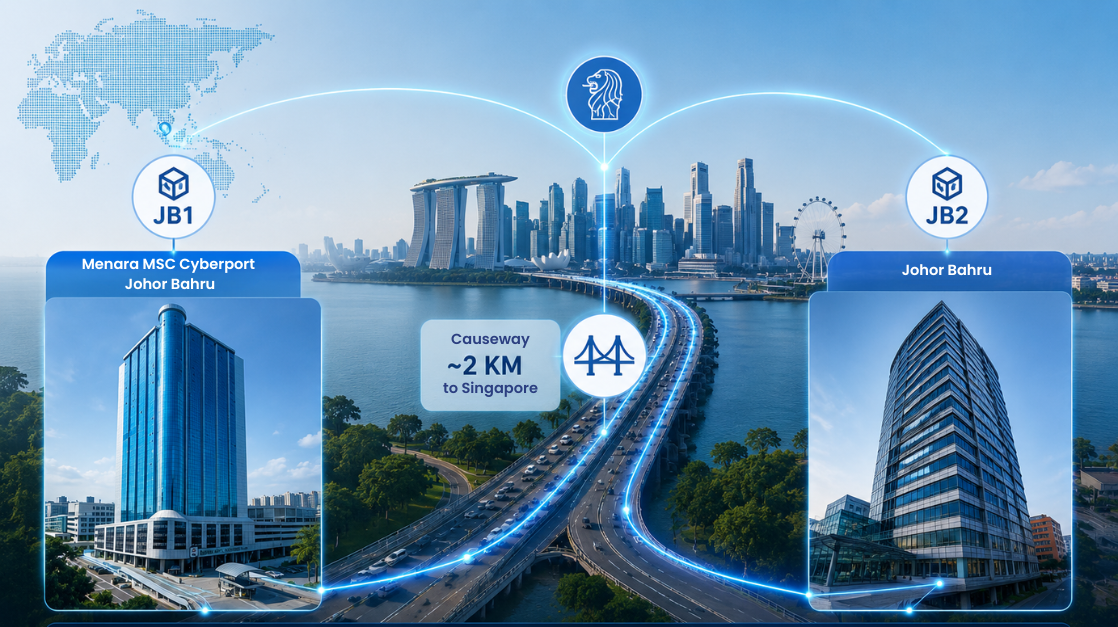
Does your dual-hub strategy represent genuine physical diversity, or are your primary and secondary routes sharing an unexamined point of failure? Request a Malaysia-Singapore Interconnection Path Review to map your traffic exchanges, audit physical transit paths, and evaluate cross-border resilience across JB1, JB2, and DE-CIX JBIX.
Empowering Southeast Asia’s Digital Future.
For further enquiries
☎️: 03 8888 8188 (General Line)
📱: 012 3188 0446 (Sales)
Operating Hours: Monday – Friday, 9am – 6pm



Copyright © Open DC Sdn Bhd (1138988-T) | All Rights Reserved.