

The conversation surrounding transformative technology in Malaysia is fully immersed in the era of an AI-driven future. As the economic and social fabric of our nation shift, the digital infrastructure that supports it must evolve from simple storage hubs into high-performance powerhouses designed to fuel next-generation digitisation. To position Malaysia as a regional […]
The conversation surrounding transformative technology in Malaysia is fully immersed in the era of an AI-driven future. As the economic and social fabric of our nation shift, the digital infrastructure that supports it must evolve from simple storage hubs into high-performance powerhouses designed to fuel next-generation digitisation.
To position Malaysia as a regional technology leader, we must address the new realities of artificial intelligence, high-density power, and, most importantly, environmental sustainability.
AI data centres represent a fundamental departure from traditional cloud facilities. The math regarding power consumption has changed completely.
To understand the sheer scale of this transition, we must look at the unprecedented demands of modern computing. Managing Director of Open DC, Wong Weng Yew notes “While a traditional 10 MW data centre could support thousands of customers for a decade, a single Al customer today can easily consume that same 10 MW.”
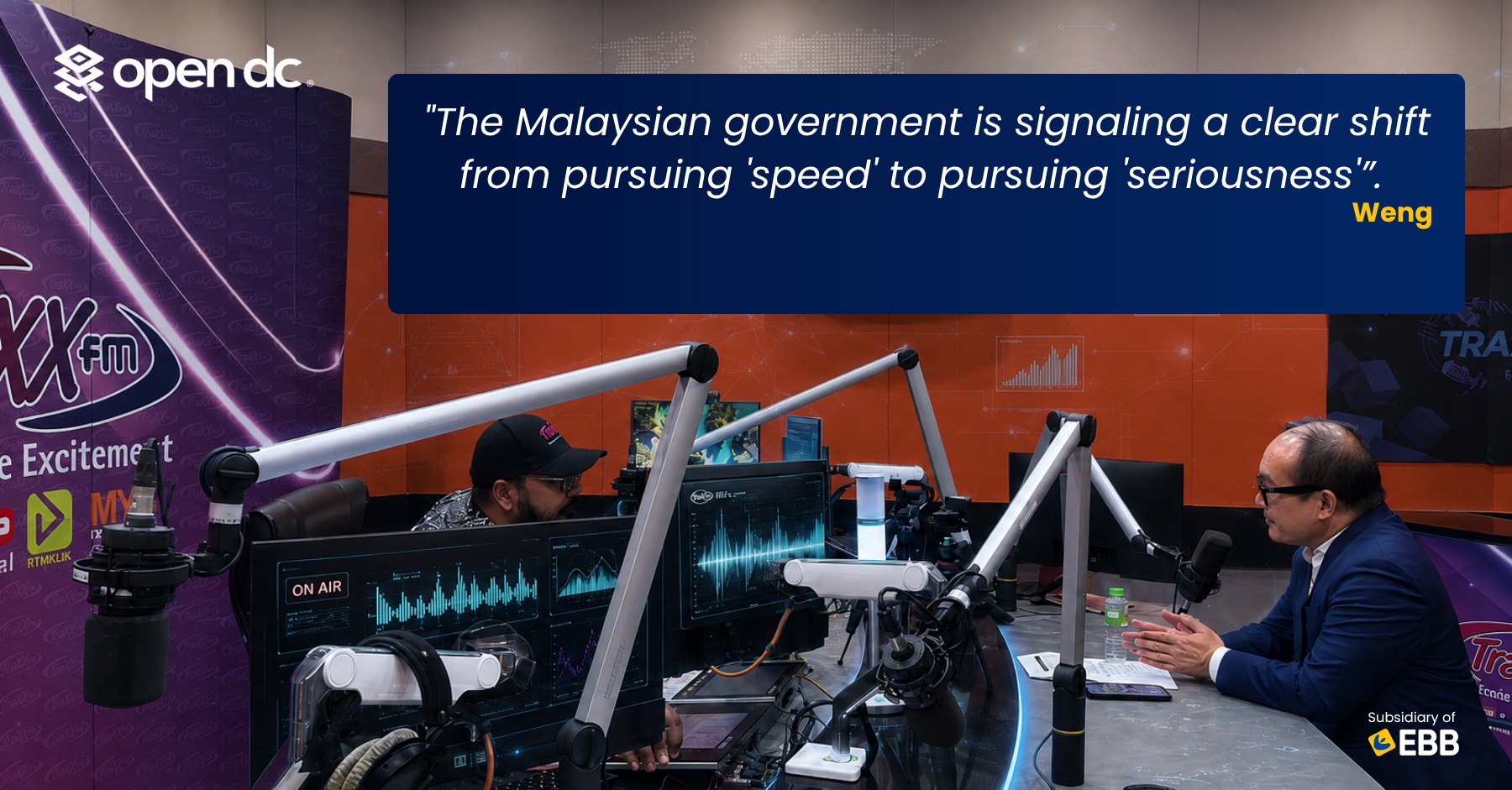
We are rapidly approaching a reality where a single server rack will demand 1 MW of power. Recognising this shift in the digital ecosystem, the Malaysian government is now restricting non-AI data centre investments to prioritise high-value digital infrastructure. This strategic move is designed to future-proof the economy. Weng captures this pivot perfectly, stating, “The Malaysian government is signaling a clear shift from pursuing ‘speed’ to pursuing ‘seriousness'”.
With great technological power comes an equally great environmental responsibility. Currently, the data centre industry in Malaysia consumes nearly 900 million litres of water every single day. While Malaysia boasts an abundance of water resources, managing this consumption with strict discipline and efficiency is non-negotiable.
To thrive on the global stage, we cannot simply compete on power generation alone. “Sustainability is Malaysia’s key differentiator in the international ‘game’ of tech. To be a regional leader, we must be a sustainability hub.” says Weng.
Achieving this requires abandoning legacy infrastructure practices. For instance, transitioning away from traditional air cooling toward Direct-to-Chip Liquid Cooling—which utilises water-circulating heat sinks to extract heat directly from processors—offers a far more cost-effective and adaptable solution for high-density servers. Furthermore, adopting Closed-Loop Systems ensures that water is continuously recycled within the plant, preventing it from being lost to the atmosphere.
The path forward is incredibly promising, but the industry is currently walking a “tightrope” when it comes to national resources. Two critical challenges must be managed:
Human Capital: The explosive growth of the data centre industry has resulted in a scarcity of specialised talent. The market demands rapid results in a matter of days, yet developing true industry veterans takes years.
Power Transparency: There is a crucial need for reporting transparency regarding power commitments. When data facilities over-request power allocations but significantly under-utilise them, it creates severe revenue shortfalls for national providers like Tenaga Nasional Berhad (TNB), which threatens the stability of the entire energy grid.
The most effective way to manage these challenges is to let the technology itself optimise the infrastructure. Weng highlights how operators can lead by example, “We don’t just host Al; we use it. We leverage Al to automate maintenance and optimise energy conservation within our own operations”.
Malaysia possesses a distinct competitive edge to become the central hub for Indo-China internet traffic and the broader Southeast Asian market. Our solid underground infrastructure, strategic geographic positioning, and decisive government policies place us ahead of many neighbouring nations.
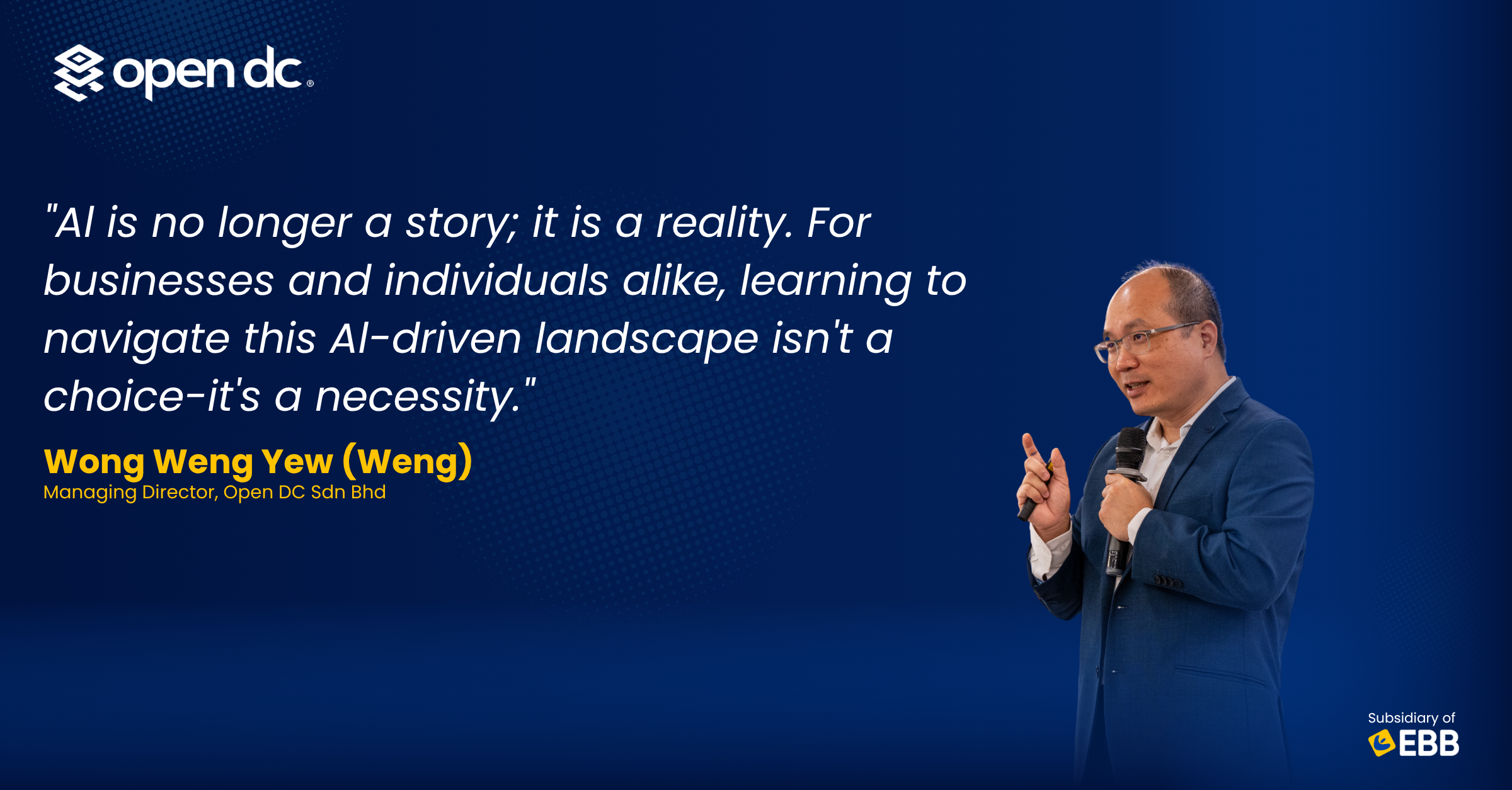
However, fully capitalising on this potential requires acknowledging that the digital landscape has permanently shifted. I’ll leave you with Weng’s concluding thought:
“Al is no longer a story; it is a reality. For businesses and individuals alike, learning to navigate this Al-driven landscape isn’t a choice-it’s a necessity.”
The future is intelligent, high-density, and sustainable. It is time we build the backbone to support it.
Empowering Southeast Asia’s Digital Future
For further enquiries



Copyright © Open DC Sdn Bhd (1138988-T) | All Rights Reserved.