

Malaysia has undergone one of the most dramatic infrastructure transformations in modern South-East Asian history. Once considered a secondary market in the region’s digital economy, it has emerged as the world’s most sought-after destination for AI data centre investment. This move trend has attracted the sustained commitment of every major global hyperscaler and becoming the […]
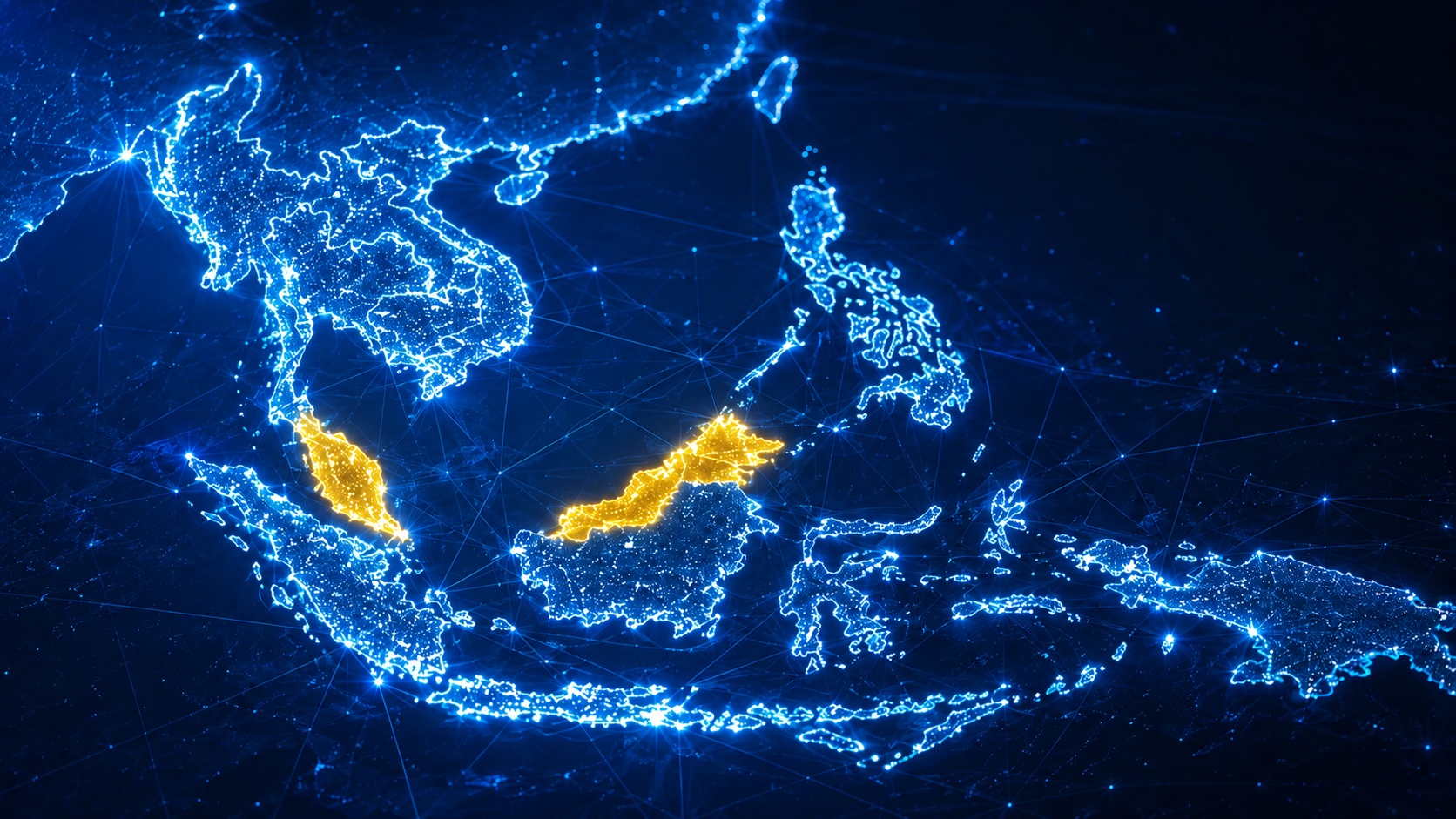
Malaysia has undergone one of the most dramatic infrastructure transformations in modern South-East Asian history. Once considered a secondary market in the region’s digital economy, it has emerged as the world’s most sought-after destination for AI data centre investment. This move trend has attracted the sustained commitment of every major global hyperscaler and becoming the epicentre of a build-out that is reshaping the region’s technological landscape.
The market stood at USD 4.65 billion in 2024; and it is projected to reach USD 6.55 billion by 2026. By 2031, forecasters at Mordor Intelligence put the figure at USD 16.02 billion, representing a CAGR of 19.55%. On the infrastructure side, the trajectory is even steeper: operational IT load capacity is forecast to grow from 1.53 GW in 2025 to 6.43 GW by 2031, a 33.24% CAGR and the fastest infrastructure ramp of any market in the region.
This report examines the forces driving that transformation, the investors placing their bets, the policy architecture underpinning it, the structural risks that could derail it, and the central strategic question that Malaysia has yet to fully answer.
Malaysia’s rise as a data centre powerhouse is rooted in a confluence of regional forces that made it the most strategically compelling AI-ready digital infrastructure destination in South-East Asia.
As the region’s digital economy accelerated through the early 2020s, demand for cloud and AI infrastructure outpaced what existing markets could absorb. Malaysia stood out by offering cheap land, abundant energy, a business-friendly regulatory environment, and a government actively courting foreign investment at scale. According to Wood Mackenzie, electricity costs for data centres in Malaysia currently run at approximately USD 0.133 per kW, positioning the country as competitively priced in the region. Land availability is extensive across Johor, Cyberjaya, and Penang. The country sits at the intersection of more than 20 submarine cable systems, providing sub-20ms latency across ASEAN.
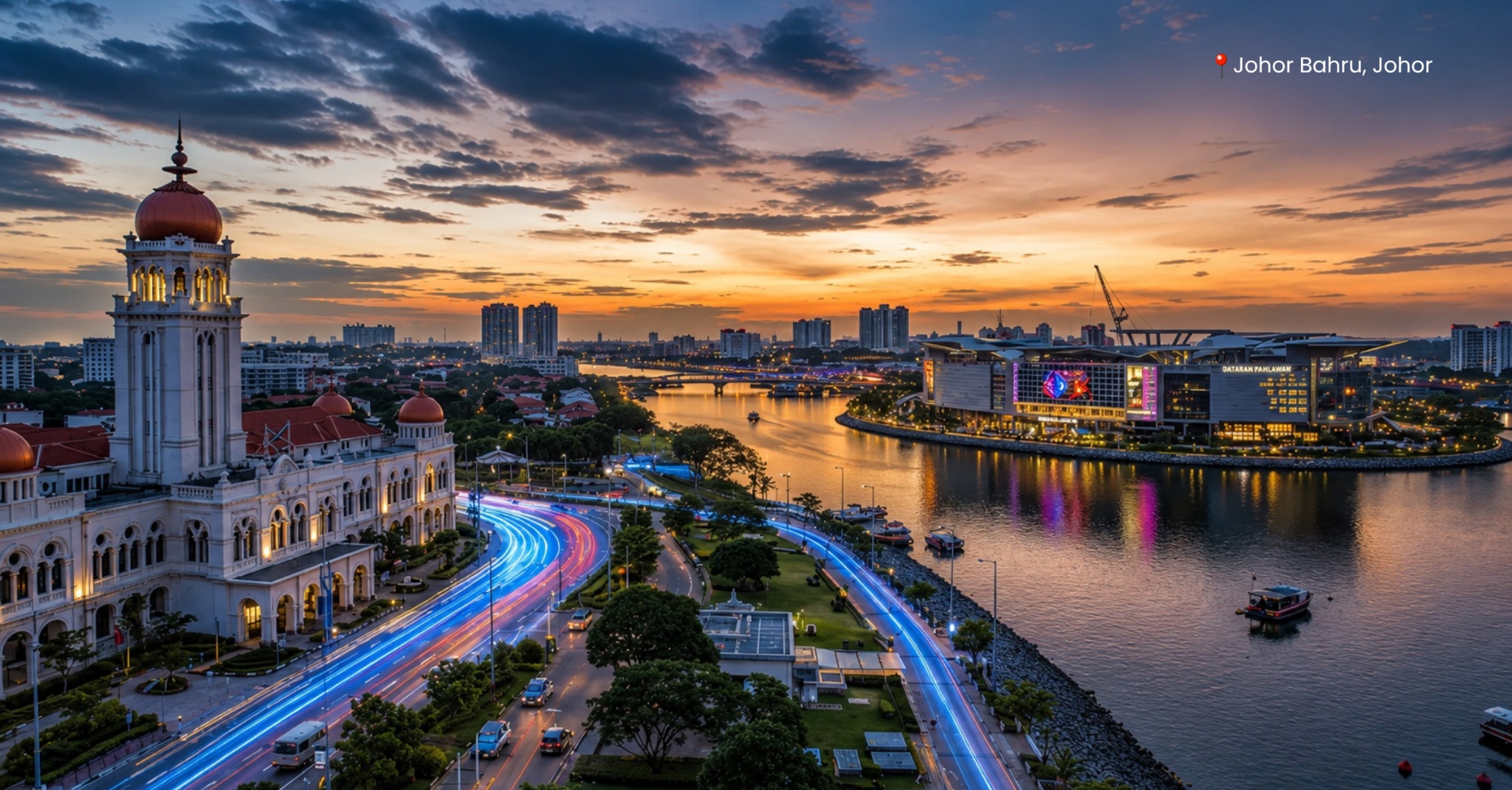
Johor Bahru emerged as the epicentre of this transformation. Its geography placed it at the heart of Southeast Asia’s most densely connected digital corridor, enabling operators to serve the region’s fastest-growing enterprise markets whilst benefiting from Malaysia’s far more favourable cost and land profile. Johor’s live supply expanded at a remarkable pace, averaging 145% annual growth from 2019 to 2024 (White & Case, 2025).
The birth of ChatGPT in late 2022 then supercharged this pre-existing momentum. The explosion in global demand for AI infrastructure ignited a new wave of investment across the region and Malaysia, already primed, captured the lion’s share of it.
The numbers tell a compelling story of structural, not cyclical, growth.
Malaysia’s data centre market stood at USD 4.65 billion in 2024 and is projected to reach USD 6.55 billion by 2026, before nearly tripling again to USD 16.02 billion by 2031. This represents a 19.55% CAGR, according to Mordor Intelligence. On the capacity side, the trajectory is even more striking. Operational IT load is forecast to grow from 1.53 GW in 2025 to 6.43GW by 2031, a 33.24% CAGR and the steepest infrastructure ramp of any market in the region.
The near-term picture is equally dramatic. Malaysia is set to double its deployed capacity within a single year, from 1.025 GW at end-2025 to 2.1 GW by end-2026, with a further 4 GW in the national pipeline beyond that, according to JLL, TechNave and Nikkei Asia. Johor alone accounts for 1.5 GW currently under construction.
Underpinning this physical build-out are landmark hyperscaler commitments:
Together with investments from YTL, NVIDIA, and other data centres, these pledges are accelerating a decisive shift away from conventional hosting and towards AI-native campuses engineered for rack densities of 40 kW to 130 kW per rack, with liquid-cooled GPU clusters pushing the upper boundary further still.
Absorption rates in the country’s two primary hubs, Johor Bahru and Cyberjaya, are running at 75% to 82%, driven by aggressive hyperscaler pre-leasing, with some facilities reporting near-full occupancy before construction completes.
Domestic operators are also scaling rapidly. Open DC, which operates six Tier-III certified facilities across Johor, Cyberjaya, Penang, and Kedah, has positioned its campuses for AI and high-density workloads, serving as part of the broader infrastructure ecosystem that hyperscaler demand is pulling forward.
Johor has rapidly evolved from a regional growth market into one of the most consequential data centre corridors in Southeast Asia. It now accounts for approximately 53% of Malaysia’s data centre market size (as of 2025) and is on track to represent 60% of the country’s entire operational IT capacity by 2030.
The investment numbers reflect the scale of this transformation. As of November 2025, the Johor state government had approved 51 data centre projects totalling RM182.96 billion. These commitments span the full spectrum of the sector, from hyperscale cloud campuses to AI-native GPU clusters purpose-built for liquid cooling. Johor Bahru alone hosts 1.5 GW currently under construction, with YTL’s 500 MW campus in Kulai representing one of the single largest AI data centre builds in the region.
“In just three years, Johor reached a data centre capacity of more than 900 megawatts — something that took established markets 12 to 14 years to build.” — Dedi Iskandar, Asia Pacific Regional Director, datacenterHawk
Modern AI-ready facilities are being designed for 20 kW to 40 kW per rack on average, with liquid-cooled GPU clusters already pushing beyond 130 kW per rack. Absorption rates in Johor are running between 75% and 82%, with hyperscalers pre-leasing power blocks of 20 MW to 50 MW before facilities reach completion.
The connectivity infrastructure anchoring all of this is equally significant. Johor is served by more than 20 submarine cable systems including SEA-MEWE 6, MIST, and BaSICS, with the new SALAM cable coming online in 2026 to extend direct connectivity to East Malaysia and broaden the state’s reach across the wider region.
The Johor-Singapore Special Economic Zone,launched in January 2025, has added further institutional weight to this momentum. It streamlines cross-border trade and investment, strengthens power and connectivity integration, and extends preferential treatment to data centre operators, positioning Johor not merely as a fast-growing market but as a fully scalable, policy-backed investment hub.
All four American mega-clouds have planted deep roots in Malaysia. Oracle committed at least USD 6.5 billion towards a public cloud region, with the new facilities designed to enable customers to leverage AI services and help Malaysian organisations modernise their digital applications. Amazon’s similarly sized USD 6.2 billion pledge follows closely, whilst Microsoft and Google have each announced multibillion-dollar investments in Malaysian cloud infrastructure. Microsoft’s Malaysia West region in Greater Kuala Lumpur is now generally available, offering Microsoft Azure, Microsoft 365, and Dynamics 365 through three distinct availability zones.
Perhaps the most symbolically important project combines a local conglomerate, a global chip giant, and an AI infrastructure specialist. Wiwynn has partnered with Malaysia’s YTL Group to develop a 600 MW AI data centre complex in Johor, with the first 100 MW phase already operational. The project, co-developed with NVIDIA, utilises the NVIDIA Grace Blackwell SuperPOD architecture and represents a structural shift from traditional server manufacturing to full-scale AI cluster integration.
Chinese technology companies including Tencent, Huawei and Alibaba have come to view Malaysia as a critical node for accessing advanced GPU hardware legally through global supply chains, then utilising those resources remotely. Because the hardware does not physically enter China, these arrangements do not directly trigger US export control restrictions. This arrangement has attracted increasing scrutiny from Washington and placed Malaysia at the centre of a delicate geopolitical balancing act.
Domestic players are also moving at scale. TM Nxera, a 51:49 joint venture between Telekom Malaysia and Singtel, has secured a 280 MW electricity supply agreement with Tenaga Nasional Berhad for a data centre campus in Iskandar Puteri, Johor. The project involves over RM1 billion in investment and is designed for large-scale AI workloads and hyperscalers, with the first phase targeted for commercial operations in 2026.
Malaysia’s government has deployed a comprehensive suite of incentives to attract and anchor this investment. The Green Lane Pathway, administered through Tenaga Nasional Berhad, shortens electricity connection timelines from between 36-48 months down to just 12 months. The Corporate Renewable Energy Supply Scheme (CRESS) allows operators to procure renewable energy directly from developers via the national grid through Third-Party Access (TPA). Rather than a flat 5% unit cost reduction, the program offers more competitive pricing through a 20% reduction in the System Access Charge (SAC) for firm supply as of late 2025, enabling corporations to hedge against rising conventional electricity tariffs in 2026.
Companies granted Malaysia Digital Status may access income tax exemptions, investment allowances, and import duty relief. The Digital Ecosystem Acceleration Scheme provides investment tax allowances of 70% to 100% on qualifying capital expenditure. The MIDA New Incentive Framework introduced in 2026 offers a tax rate of 0% to 10% for qualifying investments, whilst the Belanjawan 2026 budget included AI-specific grants and RM5.9 billion allocated to AI research, development, commercialisation, and innovation.
The Malaysia Investment Development Authority (MIDA) serves as the single approval authority, ensuring a transparent and streamlined process across all incoming data centre applications.
Malaysia’s ambition extends beyond infrastructure hosting. The National AI Office (NAIO) , established under the Ministry of Digital in 2024, is driving the completion of the AI Technology Action Plan 2026 to 2030 as a continuation of the National AI Roadmap 2021 to 2025. The government has set an explicit goal of becoming an AI Nation by 2030, with a vision of the digital economy contributing 35% of GDP by that year and reaching 900 AI startups.
The economic projections attached to that ambition are substantial. Data centres are forecast to generate USD 10.2 billion in annual economic output and create 30,900 AI-related jobs annually by 2030. Malaysia ranked 23rd globally on the AI Readiness Index in 2024 and has set a target of reaching the top 20 by 2030.
The most ambitious response to the energy sustainability challenge is the Southern Johor Renewable Energy Corridor, a USD 6 billion initiative developed through a partnership between the World Bank Group, the Johor state government, and Ditrolic Energy. The first phase will deliver up to 4 GW of solar capacity and 5.12 GW of energy storage across a 10,000-acre site, with the explicit purpose of supplying clean electricity to Johor’s data centre and industrial expansion. The project was launched in November 2025.
Malaysia is separately developing a dedicated 1 GW solar farm to supply clean energy to the Johor-Singapore Special Economic Zone, and the government’s CRESS programme is enabling direct corporate procurement of renewable energy through virtual power purchase agreements.
Looking further ahead, Malaysia has been identified as the region’s priority market for small modular reactor technology, given the sheer scale of its digital infrastructure demand. Planning scenarios include 1.2 GW of Small Modular Reactors (SMRS) capacity by 2035. While still at the early planning stage, nuclear power represents the most credible long-term solution to the renewable baseload challenge that solar and wind cannot fully address for round-the-clock data centre operations.
Johor’s vetting committee, which rejected 30% of applications in 2024 for failing to demonstrate credible water and energy efficiency plans, signals a meaningful shift from volume-first growth to quality-controlled expansion. Hyperscalers are now pre-leasing power blocks of 20 MW to 50 MW before construction completes, and vacancy rates in prime locations are running below 20%. The market is tightening, and with it, the discipline applied to new approvals.
Malaysia’s AI data centre landscape is remarkable momentum and unresolved strategic tension. The country has leveraged its geographical advantages, policy agility, and geopolitical neutrality to become the world’s most sought-after AI infrastructure destination. Valued at USD 4.65 billion in 2024, the market is projected to reach USD 16.02 billion by 2031 at a CAGR that few markets globally can match. Operational capacity is set to double within a single year, from 1.025 GW to 2.1 GW between end-2025 and end-2026.
The formula for genuine transformation is present. The policy architecture is serious. The investment volumes are real. The infrastructure is being built at a pace the world has rarely seen. What Malaysia does with the decade this boom has brought it will define not just its own technological future, but the shape of Asean’s digital economy for a generation.
Empowering Southeast Asia’s Digital Future
For further enquiries



Copyright © Open DC Sdn Bhd (1138988-T) | All Rights Reserved.