

A colocation proposal usually prices power as one number. Sometimes it is a rate in sen per kilowatt-hour, sometimes it is folded into a ringgit-per-kilowatt-per-month figure alongside space and cross-connects. Either way it arrives as a single line, and finance models it as a single line. The underlying bill is not a single line. Under […]

A colocation proposal usually prices power as one number. Sometimes it is a rate in sen per kilowatt-hour, sometimes it is folded into a ringgit-per-kilowatt-per-month figure alongside space and cross-connects. Either way it arrives as a single line, and finance models it as a single line.
The underlying bill is not a single line. Under Regulatory Period (RP) 4 , which runs from 1 July 2025 to 31 December 2027,
a Malaysian commercial or industrial electricity bill is assembled from four separate charges, adjusted monthly by a fifth, levied on a sixth, and then multiplied by a facility efficiency figure the tenant does not control. Each of those has a different basis. Several of them respond to different behaviour. And the one that surprises finance teams most is set by
a single half-hour.
None of this is obscure. It is simply not in the proposal.
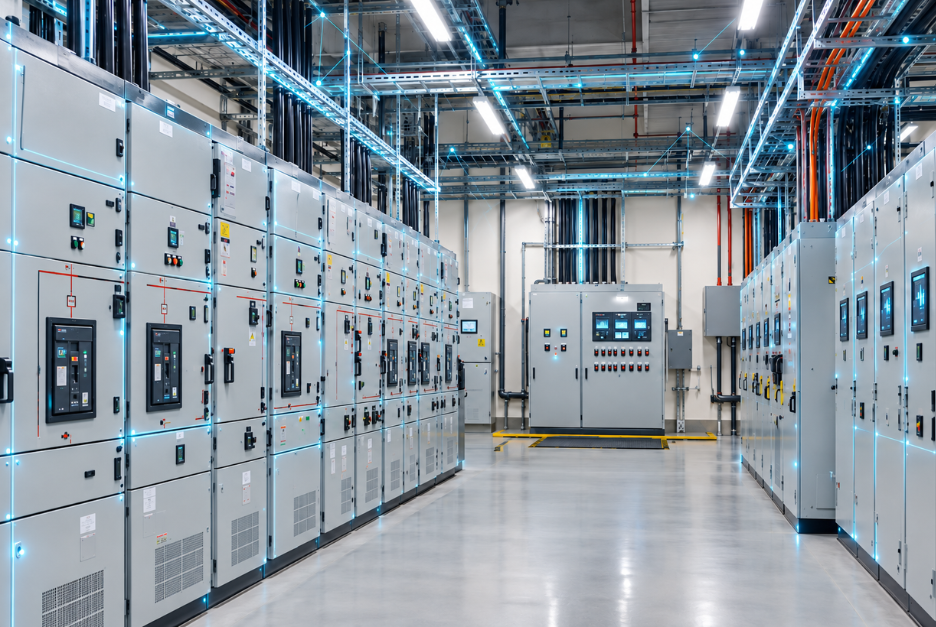
RP4 separated what used to be a largely blended tariff into components, which is an improvement for anyone willing to read it.
The energy charge is what most people mean by the tariff. It is levied per kilowatt-hour imported from the grid, and on a time-of-use tariff it splits into a peak and an off-peak rate.
The capacity charge recovers the cost of having generation available for you. For low-voltage customers it is levied per kilowatt-hour. For medium and high-voltage customers — which is every data centre of consequence — it is levied
per kilowatt of billed maximum demand.
The network charge covers transmission and distribution. It follows the same logic: per kilowatt-hour at low voltage,
per kilowatt of maximum demand at medium and high voltage.
The retail charge is a fixed monthly amount for metering, billing and account administration. It is trivial at data centre scale and is the only one of the four that is.
On top of those sit two further movements. The automatic fuel adjustment, which replaced the six-monthly ICPT mechanism, is a monthly surcharge or rebate reflecting changes in generation cost, and it has moved in the range of a few sen per kilowatt-hour through 2026. And the renewable energy fund levy is applied as a percentage of the net bill for non-domestic customers.
Two of those six items are levied on a peak. Four move with consumption. One moves monthly and is outside everybody’s control. A proposal quoting a single blended number has made assumptions about all six and disclosed none of them.
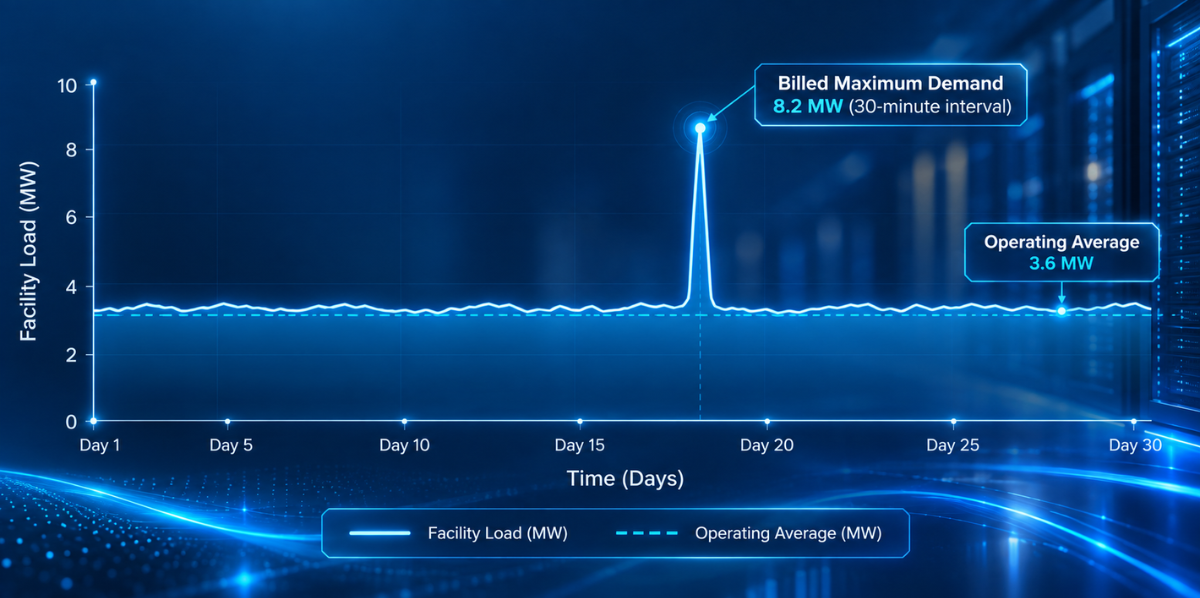
Maximum demand is the highest average power draw recorded over any single thirty-minute interval in the billing cycle. Not the average for the month. The highest half-hour in it.
Both the capacity charge and the network charge are levied on that figure at medium and high voltage, every month, regardless of how much energy was actually consumed around it. A facility that runs comfortably below its contracted draw for thirty days and spikes once — a simultaneous cooling ramp on a hot afternoon, a generator test, a new tenant’s fit-out — pays for that spike across both demand lines.
The arithmetic is easy to feel. Take a facility drawing 1.5 MW and assume, illustratively, that capacity and network charges together come to RM90 per kilowatt of maximum demand per month. That is RM135,000 a month on those two lines alone. If the recorded maximum demand comes in ten per cent higher than the operating average — one bad half-hour — the same facility pays roughly RM13,500 more each month it recurs, or about RM162,000 across a year.
For a single-tenant building, managing that is an operational discipline. For a multi-tenant hall it is a contractual one, and this is where colocation agreements are thinnest. The building has one maximum demand. Several tenants contributed to it, not necessarily in proportion to their energy consumption. How that charge is allocated is a commercial decision, and in a surprising number of agreements it is simply not written down.
That is the first question worth putting in writing: how is maximum demand measured for my allocation, and if it is measured at the building rather than at my meter, on what basis is my share calculated.
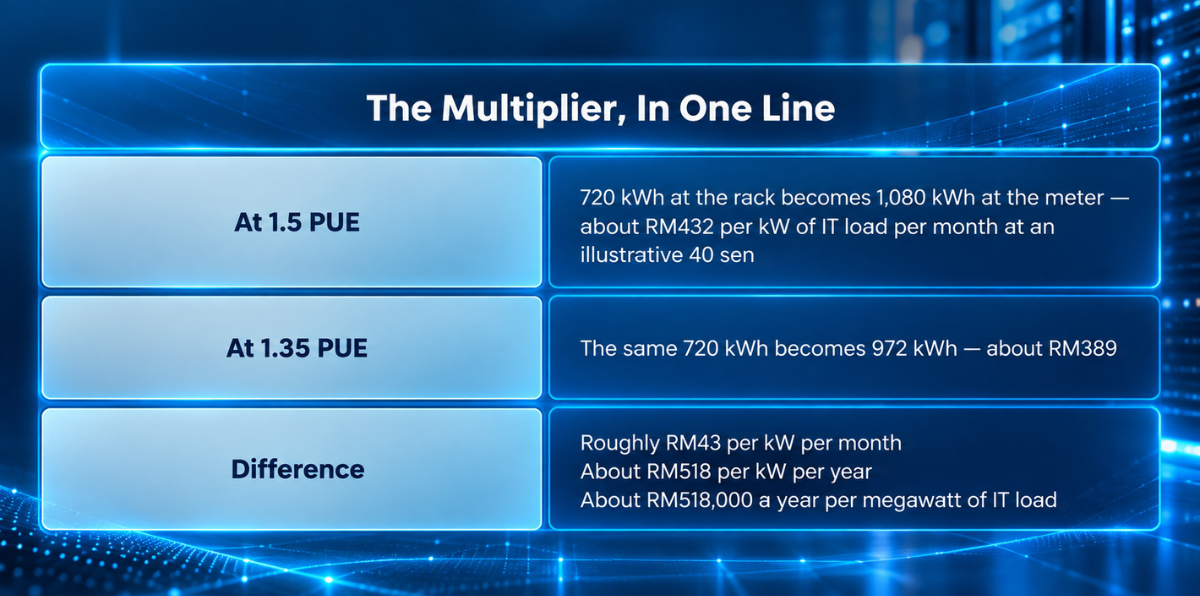
Power usage effectiveness, PUE, is the ratio of total facility energy to the energy actually delivered to the IT equipment.
A PUE of 1.5 means that for every kilowatt-hour reaching a server, half a kilowatt-hour again goes to cooling, power conversion losses, lighting and everything else the building needs to stay alive.
It is usually filed under sustainability. It belongs in the pricing model, because it multiplies every kilowatt-hour on the bill.
Take one kilowatt of IT load running continuously. Over a thirty-day month that is 720 kilowatt-hours at the rack. At a PUE of 1.5 the meter sees 1,080. At an illustrative all-in 40 sen per kilowatt-hour, that kilowatt of IT load costs about RM432
a month in energy.
Now move the PUE to 1.35 and change nothing else. The meter sees 972 kilowatt-hours. The same kilowatt of IT load costs about RM389. The difference is roughly RM43 per kilowatt per month — around RM518 per kilowatt a year, or about RM518,000 a year across a megawatt of IT load.
No workload changed. No rate changed. The entire saving came from a number that most RFPs collect in an ESG annexe and never carry into the financial model.
Two cautions, because this is where the argument is most often overstated. Design PUE is a specification and operating PUE is a measurement, and in the Malaysian climate the gap between them is real — ambient conditions, partial load and commissioning state all move it. A facility running at thirty per cent of design load will report a worse PUE than the same facility at eighty per cent, through no fault of the design. So the figure to ask for is the measured annualised PUE at a stated load factor, not the design target. An operator that offers only a design figure is offering an intention.
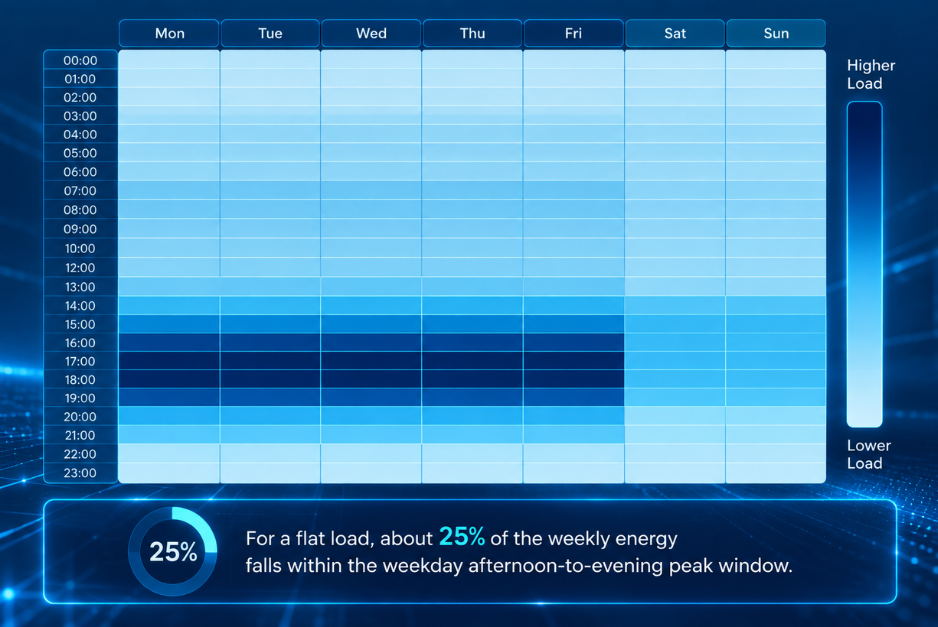
Time-of-use tariffs charge more for energy inside a defined peak window and less outside it. Under the current structure the peak window runs on weekday afternoons and evenings, with weekends treated as off-peak throughout.
For most industrial customers that is an invitation to shift load. For a data centre it usually is not, because the load is flat by design. A weekday afternoon-to-evening peak window covers forty of the 168 hours in a week, so a genuinely flat facility takes a little under a quarter of its energy at the peak rate whatever it does. There is no shifting to be had.
The part that does matter is on the demand side. Under the medium and high-voltage time-of-use structures, the capacity and network charges are levied on maximum demand recorded within the peak window, with off-peak maximum demand not attracting those charges. That changes the calculation for any load with even partial flexibility — thermal storage in the cooling plant, battery systems sized for demand shaving, or AI training workloads that genuinely can be scheduled, as distinct from inference workloads that cannot.
It also means the choice between a general tariff and a time-of-use tariff is not a small administrative matter. It is a structural decision about which behaviour the facility is being priced on, and it deserves a modelled comparison rather than a default.
Three lines are converging, and a contract signed today will be operating inside all three.
Data centres accounted for about 9.28 per cent of Malaysia’s electricity consumption by the middle of August 2026, up from roughly six per cent in the first half of the year. The pipeline behind that is larger still: as at June 2026 there were 61 secured projects totalling 8.35 GW, of which 42 projects representing 5.65 GW were connected to the grid but only about 1.26 GW were actually drawing. Connected capacity is not consumed capacity, and the gap between them is where the next two years of demand growth is already sitting.
On the supply side, MBSB describes 2027 to 2029 as a power catch-up period, in which demand outpaces firm generation additions and no new gas-fired capacity is expected in 2027. The relief arrives later: roughly 8.3 GW of new generation between 2028 and 2031, against about 5.6 GW of coal capacity retiring across the same window.
And RP4 expires on 31 December 2027. Whatever RP5 looks like, it will be set against that supply position rather than today’s. Any five-year model that assumes the present structure holds throughout has quietly taken a position on a regulatory decision that has not been made.
The practical consequence is not that prices will necessarily rise. It is that the reset date belongs in the contract. A term sheet should say what happens to pricing on 1 January 2028 — whether the pass-through simply follows the new schedule, whether there is a cap, whether either party may reopen — rather than leaving it to be discovered.
There are alternatives to buying every kilowatt-hour at the prevailing tariff, and they are being used at scale.
The Corporate Renewable Energy Supply Scheme, CRESS, allows a large consumer to contract directly with an independent renewable generator and wheel the electricity across the grid, paying a regulated access charge for the use of the network. Eligibility sits at peak demand above one megawatt with a high-voltage connection, and contracts typically run ten to twenty-one years, matching the life of the generating asset. Operators have signed at scale under it — Data Centres at around 400 MW and 500 MW have both been reported.
The trade is real, though. CRESS substitutes a long-dated fixed generation price and a regulated wheeling charge for exposure to the tariff. That is a hedge, not a discount, and whether it is a good one depends on a view about RP5 and RP6 that most buyers have not formed. It also sits with whoever holds the supply relationship, which in a colocation arrangement is usually the operator rather than the tenant — so the relevant question is whether, and how, the benefit is passed through.
On-site generation, principally rooftop and adjacent solar, reduces imported kilowatt-hours and therefore the energy charge and the fuel adjustment that rides on it. It does very little for maximum demand, because the demand peak can fall outside generating hours. Battery systems address demand rather than energy, and under a time-of-use structure where demand charges attach to the peak window, they have a clearer commercial case than they did under the old blended tariff.
None of these is a reason to delay a decision. They are reasons to ask which of them the operator is already using and what the tenant’s share of the outcome is.
Every one of these can be answered in a sentence by an operator that knows its own position.
1. On what basis is electricity passed through — at cost, at cost plus a stated margin, or at a fixed rate — and if fixed, what assumption about the automatic fuel adjustment is embedded in it.
2. How is maximum demand measured for my allocation, and if it is measured at building level, what method apportions it between.
3. What is the measured annualised PUE for this specific hall, at what load factor, over what period — not the design figure, and not a portfolio.
4. Which tariff structure is the facility on, general or time-of-use, and what modelling supported that choice for a load shaped like.
5. What happens on 1 January 2028, when RP4 ends — does pricing follow the new schedule automatically, is there a cap, and does either party have the right to.
6. Is any portion of supply contracted outside the tariff through CRESS, a green tariff or on-site generation, and how is that benefit.
An operator that answers all six in writing is not doing the buyer a favour. It is describing a position it already occupies.
The information gap in Malaysian colocation pricing is not a secrecy problem so much as a habit, and habits change when enough buyers ask.

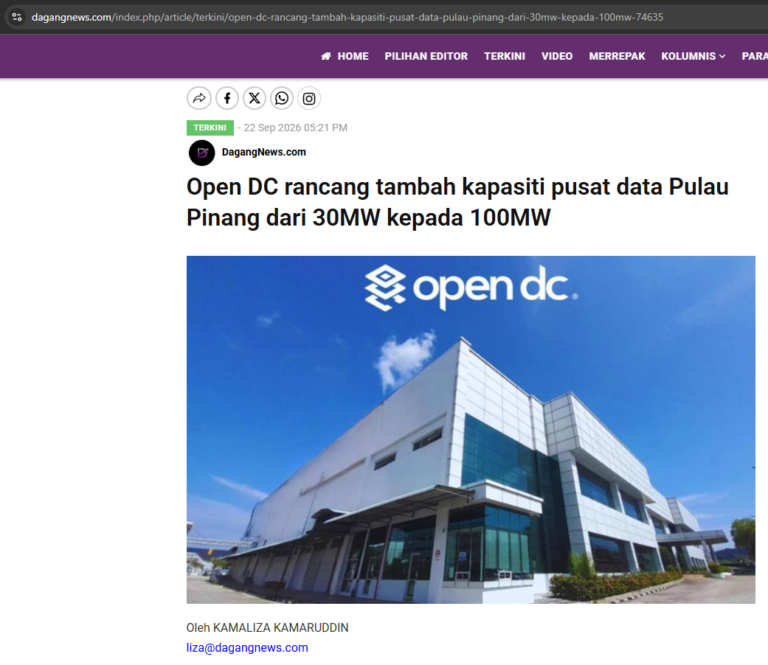
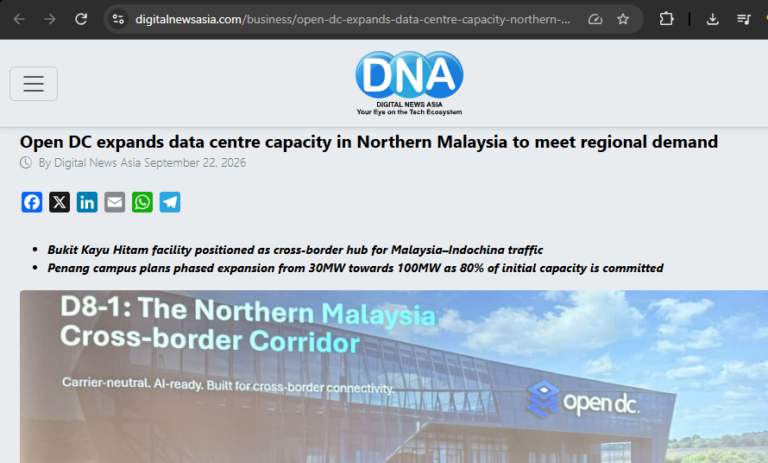
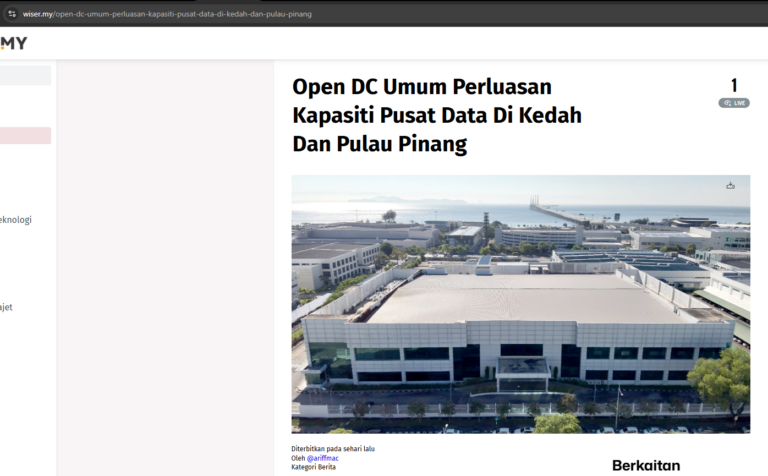
We publish specifications per site rather than portfolio totals, because a portfolio average is not a thing anyone can buy. JB1 in Johor Bahru carries 20 MW, with 2 MW of critical load per floor across 200,000 sq ft. PE2 in Bayan Lepas operates upgradable to 100 0 MW. D8-1 at Bukit Kayu Hitam runs 5 MW live, upgradable to 20 MW at 33 kV, with cooling customisable to support direct liquid cooling. Design and target PUE across the estate is below 1.5.
Sitting across three corridors rather than one has a commercial consequence as well as a resilience one. Grid queues, substation headroom and energisation timelines are regional, and a corridor with less concentration is a different cost position, not only a different risk position.
We are also clear about the boundary. Design and target PUE is a specification. Measured annualised PUE per hall, at a stated load factor, is the figure this post argues a buyer should insist on, and publishing it across all six sites is work in progress rather than work completed. We would rather say that than quote a design figure as though it were a measurement.
Request a power cost structure for any Open DC site — what is passed through and on what basis, how maximum demand is measured and allocated, how the fuel adjustment is handled, and what happens at the RP5 reset on 1 January 2028.
Get in touch, or find us at Data Centre World Asia, Marina Bay Sands, 29–30 September.
Empowering Southeast Asia’s Digital Future.
For further enquiries
☎️: 03 8888 8188 (General Line)
📱: 012 3188 0446 (Sales)
Operating Hours: Monday – Friday, 9am – 6pm
Copyright © Open DC Sdn Bhd (1138988-T) | All Rights Reserved.